Tiffany Xingyu Wang on What AI Can't Replace
From Shanghai to Paris, Singapore to Silicon Valley, Tiffany Xingyu Wang (‘10) has built her career at the edges — of industries, cultures, and the questions that emerge when technology outpaces the trust we place in it. This article is part of a series of portraits published in partnership with the Sciences Po American Foundation to show the diversity of Alumni careers throughout the world and especially in the US.
Written by Tanya Akl
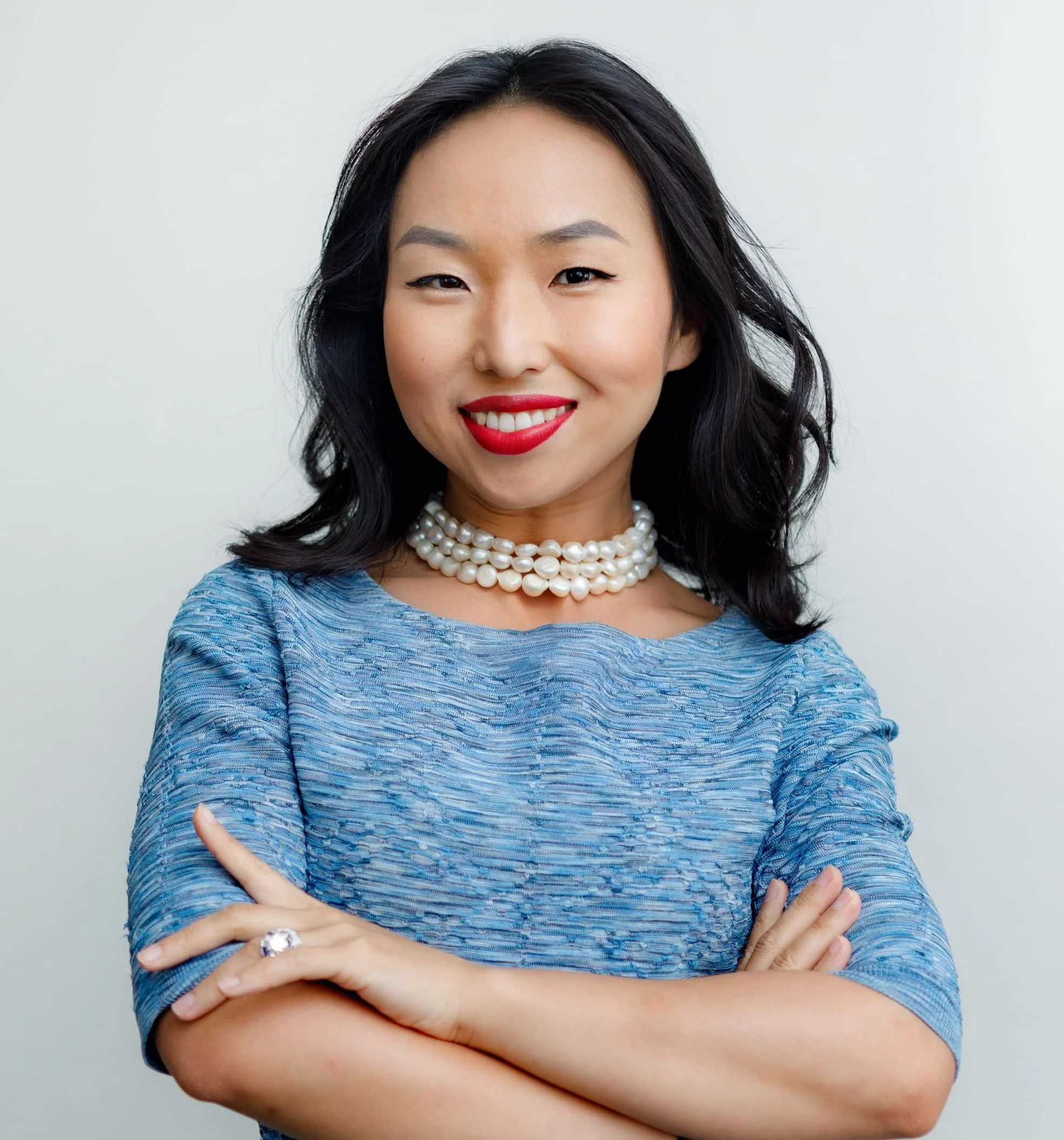
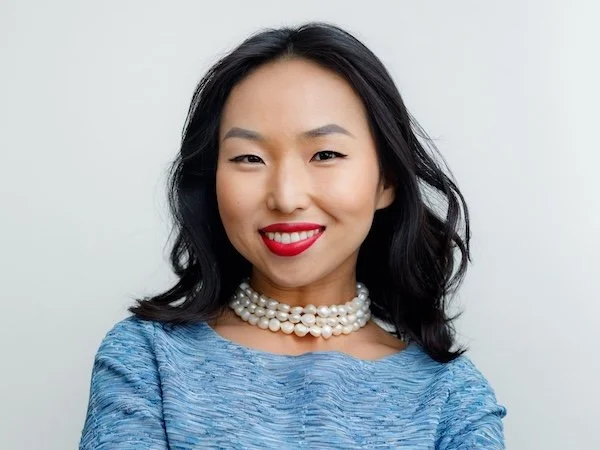
Tiffany Xingyu Wang (All Rights Reserved)
Over the past decade, Tiffany Xingyu Wang has built AI systems that keep over a billion people safe online, earned recognition as a Forbes Most Entrepreneurial CMO and World Economic Forum Young Global Leader, and been appointed an Atlantic Council Senior Fellow. Now she is writing the book on what may be the defining challenge of our time: how to unlock AI's promise without losing what makes us human.
Wang arrived at Sciences Po almost by chance. As an undergraduate student at Fudan University in Shanghai, she was part of the first cohort to benefit from a new international partnership with Sciences Po. Initially planning only an exchange year — and with a full-time job offer already secured back home — she ultimately chose to remain in Paris and convert her exchange into a master’s degree. “France was not in my planning,” she recalled. “I didn’t speak French, and I hadn’t planned to study abroad at all.” Yet the exposure to a culture very different from the one she was born into along with a diverse campus environment that opened her to new ways of approaching problems and life, proved transformative. It was the first of many border crossings, geographic and intellectual, that would define her trajectory.
At Sciences Po, Wang gravitated toward international finance and African studies, developing both technical expertise and a regional perspective that set her apart early in her career. She graduated in 2010 with a Master in Finance and Strategy, then joined BNP Paribas in Paris, working in energy and project finance across sub-Saharan Africa. There, she financed large-scale infrastructure projects in mining, oil and gas, and commodities- work that placed her at the intersection of finance, development, and geopolitics.
Her career soon took another unexpected turn. While hoping to relocate to Africa, Wang was instead sent to Singapore by Standard Chartered Bank, where she became part of a small team building the bank’s renewable energy finance platform across Southeast Asia. It was during this period that her interests began to shift from finance alone to the technological forces transforming entire industries. Reading early research on how artificial intelligence could optimize energy efficiency, she became fascinated by the potential of AI to reshape not just operations, but incentives, returns, and human decision-making. Encouraged by her colleague and mentor Mike Samson, she made the bold decision to step back from a successful banking career and pursue an MBA at Wharton, with the goal of crossing yet another border- this time, from finance into technology.
After completing her MBA, Wang settled in San Francisco, where she entered the tech world through Salesforce. Despite having no formal background in product development or artificial intelligence, she was hired into a product role—an opportunity her hiring manager, a vice president of product, later explained to her simply: “If you can navigate cultures and life across China, France, Singapore, and the United States, you can learn how to succeed in product management.”
Her transition into entrepreneurship followed naturally. After her time at Salesforce, Wang immersed herself in Silicon Valley's startup ecosystem. She took on the role of Chief Strategy and Marketing Officer at Spectrum Labs, helping the team grow from pre-seed to tens of millions in revenue and building the company into a leading player in the online safety space. She then joined OpenWeb as its Chief Marketing Officer and head of the trust and safety business unit, helping scale the company to unicorn status with hundreds of millions in revenue. She was named a Forbes Most Entrepreneurial CMO for her marketing prowess and holds two USPTO patents in AI for marketing — a rare combination of commercial instinct and technical depth.
After more than a decade in the United States (and after becoming a mother of two) Wang turned her attention to a new chapter: education and advocacy. Drawing on her experience across finance, technology, policy, and ethics, she is currently completing a book on trust in the age of artificial intelligence, to be published by Wiley as its 2026 lead title. The book introduces a framework for calibrating trust in AI systems, drawing on interviews with Fortune 500 executives, leading AI researchers, and policymakers around the world. It aims to help a broad audience understand how AI works, what its promises and risks truly are, and how individuals can reclaim their agency in a world increasingly shaped by algorithms.
Reflecting on a career spent crossing borders that others treat as fixed — between East and West, finance and technology, building products and shaping policy — Wang's advice to current Sciences Po students is direct: work relentlessly, stay curious, and cultivate strong convictions, especially now. In an era where algorithms can access and synthesize virtually all human knowledge, she argues, the competitive advantage belongs to those who bring what AI cannot. "What remains uniquely human," she noted, “is judgment, intention, and the courage to design your own path.”
For more information on and to pre-order Wang's upcoming book, visit here.