Rethinking Public Health with Claire Chaumont
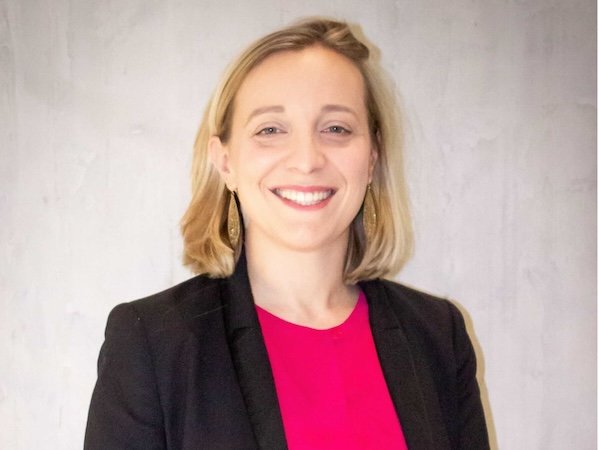
After working with governments across Africa and Latin America as well as research institutions, including Harvard T.H. Chan School of Public Health and the World Health Organization, Claire Chaumont (‘07) now leads strategy execution initiatives at UCLA in Los Angeles. She has recently co-authored a book offering a conceptual perspective on public health. This article is part of a series of portraits published in partnership with the Sciences Po American Foundation to show the diversity of Alumni careers throughout the world and especially in the US.
Written by Tanya Akl
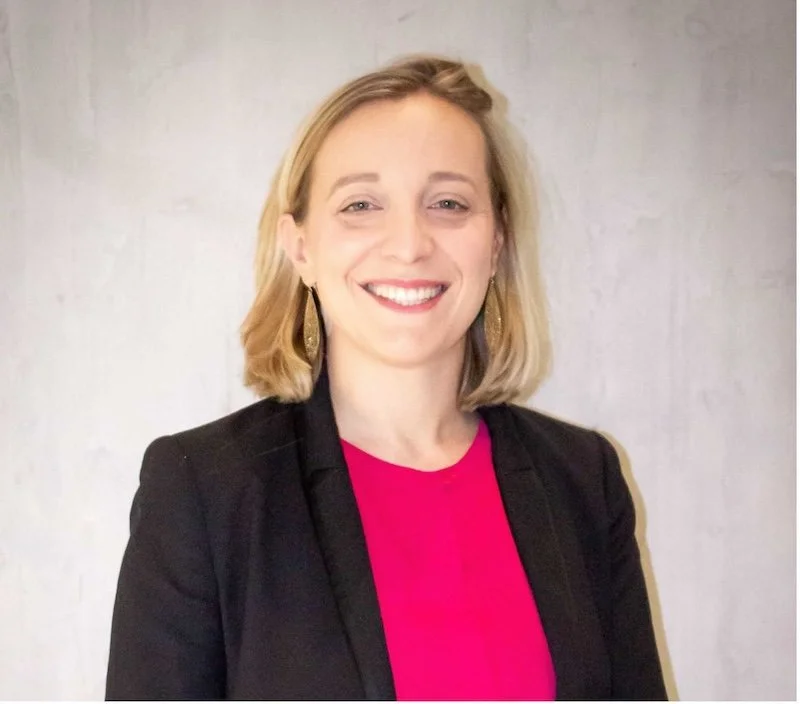
Claire Chaumont (All Rights Reserved)
Long before Claire Chaumont ('07) began working across global health, academia, and university strategy, Sciences Po gave her a skill she would carry throughout her career: how to think. “It gave me a way of thinking about problems and synthesizing information that has structured my thinking throughout my career,” she says.
That foundation has taken her across countries, institutions, and disciplines. Since graduating in 2007 with a master's degree in Finance and Strategy, specializing in International Business, Chaumont has built a career spanning global health, international organizations, academia, and university strategy. Today, she is Special Advisor to the Chancellor on Strategy Plan Initiatives and leads the Strategy Execution Team at UCLA, while also holding a faculty appointment in the university's Department of Health Policy and Management.
Growing up in Lyon, Chaumont began studying Mandarin in high school. A trip to Shanghai deepened her interest in China and international affairs, making Sciences Po a natural fit. After entering through the concours in her second year, she immersed herself in the school's international and interdisciplinary curriculum.
“It was very eye-opening, both the people and the environment,” she recalls. Coming from a family where international living and work were not especially common, she was suddenly surrounded by professors and students from around the world.
She spent her third year in Beijing, continuing her study of Mandarin, and later spent a year in Australia as part of her master's studies. Those experiences reinforced her appreciation for the way Sciences Po taught students to approach complex issues. “It was a very strong foundation,” she says. “The way we were taught to think about issues was rigorous.”
Her professional path since has taken her somewhere she had not initially anticipated: public health. While in Beijing, Chaumont became involved in a project examining primary health care in China. Back in France, she volunteered with Médecins du Monde on a program supporting Chinese sex workers, later worked with a drug abuse center, completed an internship with the World Health Organization, and joined a consulting firm advising French hospitals.
Wanting to develop more specialized knowledge, she pursued a master's degree in Health Policy, Planning and Financing in London. She then moved to Mexico, where she joined the National Institute of Public Health of Mexico and spent four years working on international health projects collaborating with governments and research institutions across Africa and Latin America.
Her next step was Harvard, where she completed a Doctor of Public Health focused on leadership. The experience shifted her ambitions from becoming a technical specialist in health financing toward strategy and implementation. “I was thinking I was going to be a health financing expert,” she says. “Then the leadership component really changed my perspective. I realized I wanted to think more about strategy and execution.”
After working in New York and returning briefly to France, Chaumont moved to Geneva to join the World Health Organization, where she spent three years working on organizational strategy and strengthening alignment between headquarters, regional offices, and country teams.
When her former Harvard dean, Julio Frenk, became Chancellor of UCLA, he invited Chaumont to build a new team focused on strategy execution. She moved to Los Angeles in 2025.
At UCLA, her work spans research, teaching, campus engagement, and organizational culture, helping translate the university's broader vision into action. Alongside her strategy role, she remains active in public health through her faculty appointment. Much of her current thinking centers on a question that has become increasingly important in public health: how do you improve health when so many of the forces shaping it exist outside the traditional health system?
““If you want to understand public health today, you need to know something about agriculture, transport, or the environment. You need to understand how health is actually produced.””
That perspective is at the heart of Chaumont's new book, Understanding Public Health: Clear Thinking for Effective Action, co-authored with Frenk and Suerie Moon.
The book grew out of a course Chaumont first encountered as a doctoral student at Harvard. She became a teaching assistant, then an instructor, and eventually helped lead the course. The resulting textbook takes a broad, conceptual approach to public health, asking fundamental questions about what health means, what shapes it, how health systems work, and how politics, leadership, technology, and power influence efforts to improve health.
The goal, Chaumont explains, is to give readers a kind of “360-degree vision” of public health, helping them understand how different parts of a complex system fit together before deciding how to intervene.
The project has also allowed her to explore new approaches to teaching. She worked with learning designers to use AI in developing and refining pedagogical resources for the book, and the team is now preparing to pilot an AI-based platform designed to help students engage with its concepts.
Looking back, Chaumont sees Sciences Po as having given her more than an academic foundation. It gave her a way of thinking, exposure to new perspectives, and a community that has remained with her.
““I think the first piece is learning how to think (...) The second is that it gave me access to new perspectives and new people. It probably gave me some ambition that I wouldn’t have thought of before.””
For current students and young graduates, her own winding career offers a reminder that professional paths rarely unfold exactly as planned. “Life is long,” she says. “Professional careers are long. Things happen. You get excited about different things, and opportunities take you in directions you didn't expect.”
Her advice? Slow down, stay curious, and leave room for the unexpected.